


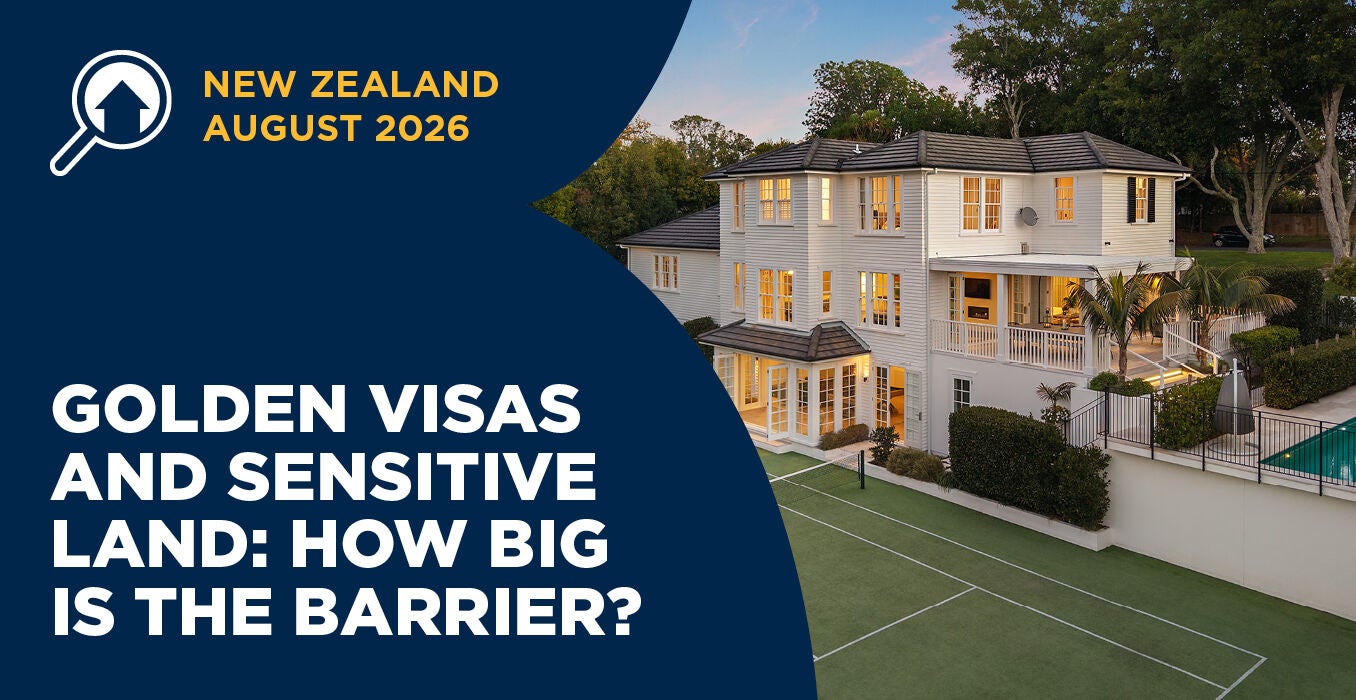
How big is the barrier?
The government's Active Investor Plus (Golden Visa) rules, allowing holders to buy one home above $5 million, have opened a new pool of luxury buyers. This has put a spotlight on sensitive land rules, which agents say materially limit which properties these buyers can pursue. Our research suggests the constraint is less severe than commonly assumed, though it remains real for certain properties and in certain locations.
Golden Visas and sensitive land
Land Information New Zealand (LINZ) sets out more than 20 characteristics that can make land sensitive. Golden Visa holders cannot buy sensitive land without other approvals or a different visa, so these rules will impact them if a desired home sits on sensitive land. Agents across the market have noted these rules often apply to $5 million-plus homes given they are typically large and/or waterfront.
Method to estimate the proportion of listings that are sensitive land
To test how likely the rules are to actually be a problem, we assessed residential and lifestyle listings advertised above $5 million across the country during June 2026 against the criteria most likely to apply: land in coastal or marine areas, non-urban land exceeding five hectares, and properties that exceed land area thresholds on islands. We note various other criteria could apply, but many of these are very niche.
A significant proportion are sensitive land, but not the majority
We found 29% of these listings are likely fall into the sensitive land definitions: 20% being non-urban land above five hectares, 11% being in marine or coastal areas, and 3% being above size thresholds on certain islands. Some properties are likely to trigger multiple criteria. Regional results vary. In some regional areas all of the current listings are likely to be sensitive land, typically due to local property prices being relatively affordable so $5 million-plus properties will be large and/or coastal, presenting a much higher likelihood of being sensitive land.
Sensitive land is not always straight forward to identify
A challenge for the market is that while some of the criteria are straight forward, others are technically tricky to apply. For example, the marine and coastal area criteria relate to how a property’s boundary is positioned relative to tidal boundaries. A property being “waterfront” does not immediately mean it is sensitive land because it will depend specifically on the property’s boundaries. Given this complexity, buyers and vendors should seek individual advice rather than rely on assumptions. Technical specialists can certify sensitive land status (a fee applies).
Putting it all in context
It is also worth noting that most $5 million-plus buyers are New Zealand citizens, here or abroad, for whom sensitive land controls do not apply. Sensitive land status by itself will not determine whether a property sells, though it may impact the specific pool of buyers.
Contact us


